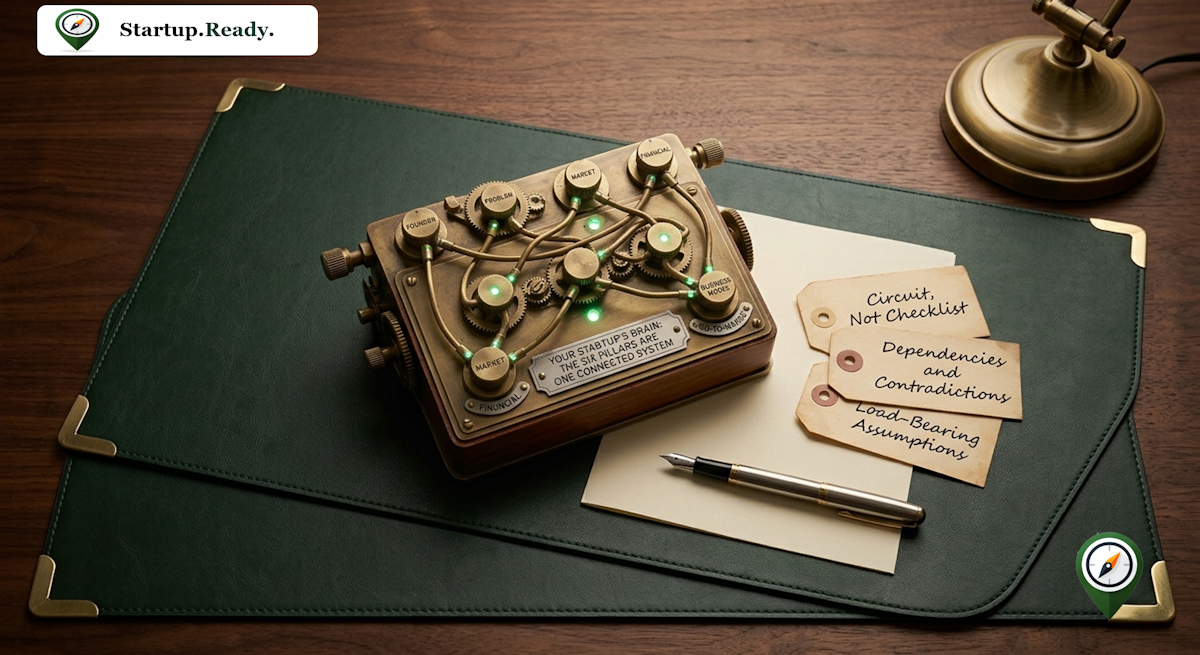
The Startup's Brain: Why Your Six Pillars Are One Connected System
Most stalled startups do not fail on a single bad decision. They fade.The founder is still working. The build continues, the meetings happen, the deck gets another revision. But the updates slow down...
Read More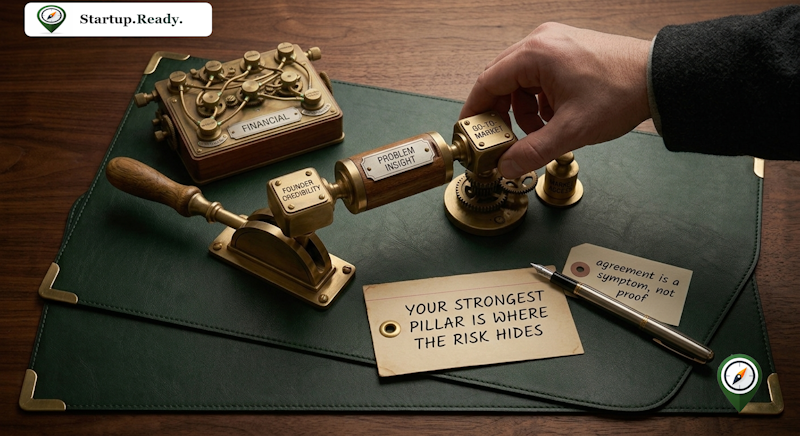
Your Strongest Pillar Is Where the Risk Hides
Ask a founder which part of their startup worries them, and they will point to the weakest one. Then they go to work on it. Shore up the shaky pillar, raise the low score, close the obvious gap.The i...
Read More
Startup Market Segmentation: What a Target Market Actually Is and Why Yours Is Probably Too Broad
Most founders can tell you who their target market is. They say something like "small business owners" or "busy professionals" or "anyone who needs help with X." They say it with confidence. They hav...
Read More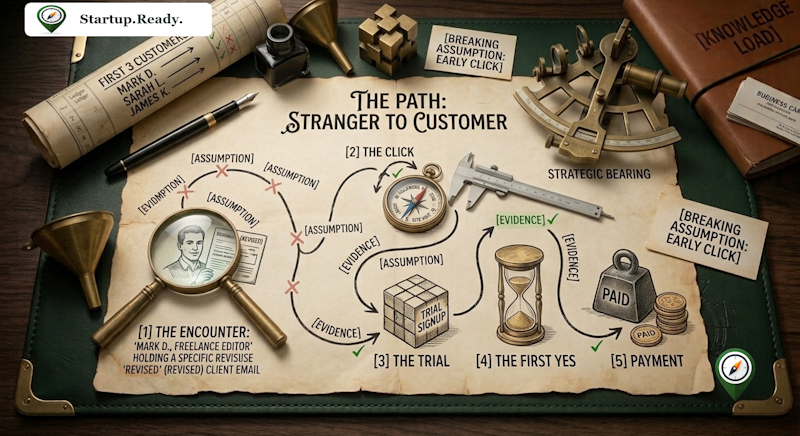
Can You Walk One Person From Stranger to Paying Customer?
Ask a founder how they will get their first customers and many describe motion. They will post, they will reach out, they will show up in the right places, they will build an audience and let it conv...
Read More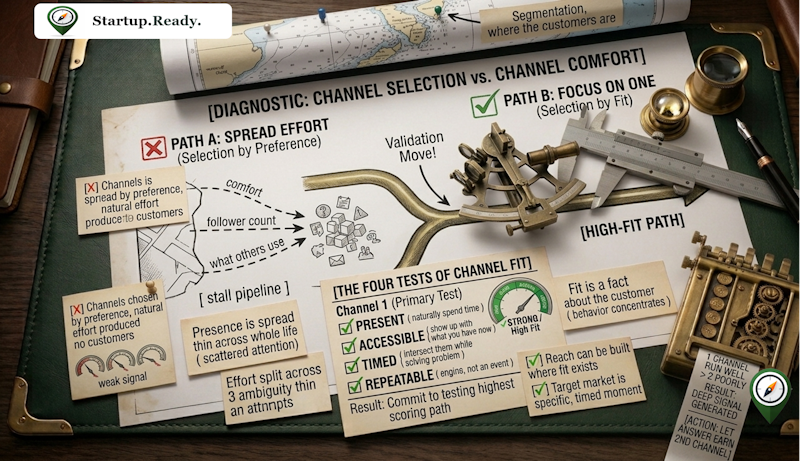
You Don't Have a Channel Problem. You Have a Channel Selection Problem.
A founder posts on LinkedIn, sends some cold emails, starts a newsletter, shows up on the platform where they already have a following, and after a few months of steady effort, none of it has produce...
Read More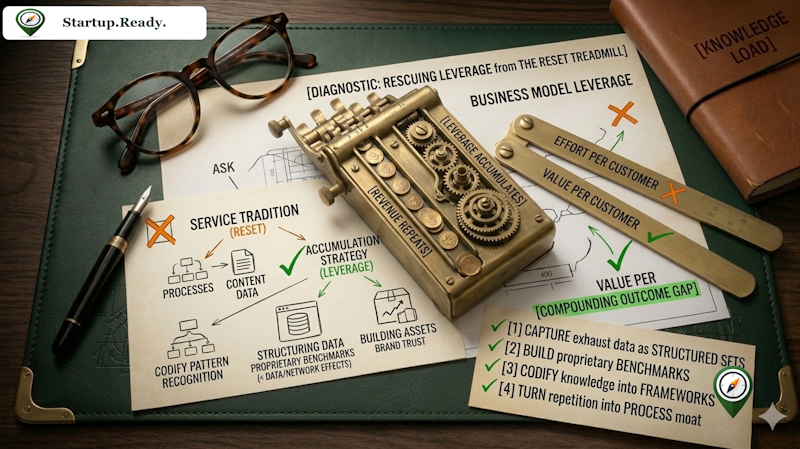
You Are Pricing Your Effort. Your Customer Is Buying an Outcome.
Look at how you describe what you sell. Ten hours of consulting a month. A detailed report within forty-eight hours. Three rounds of revision. Two weeks of discovery. Weekly check-ins and a monthly s...
Read More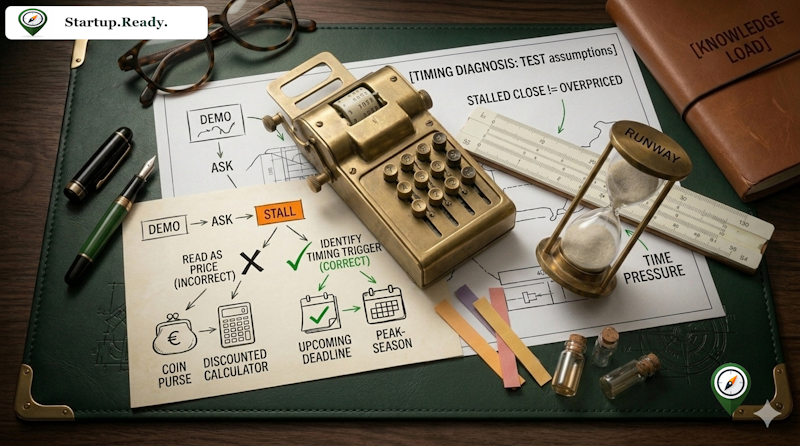
Your Customer Is Not Deciding Whether to Use You. They Are Comparing Their Options.
Founders evaluate their business one way, and customers evaluate it another, and the gap between the two frames is where a lot of good products quietly lose.You look at your business and see a produc...
Read More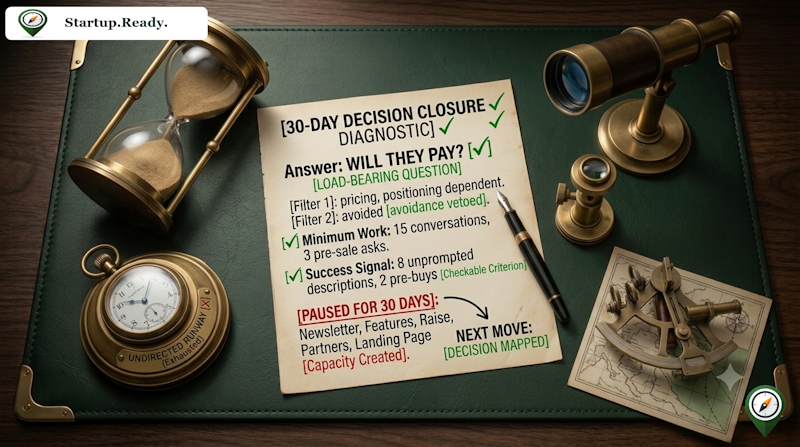
Burnout Is Not Too Much Work. It Is Too Much Undirected Work.
You are exhausted, and the obvious explanation is that you are doing too much. So you try to do less. You rest, you cut hours, you step back, and the exhaustion does not really lift, because you were...
Read More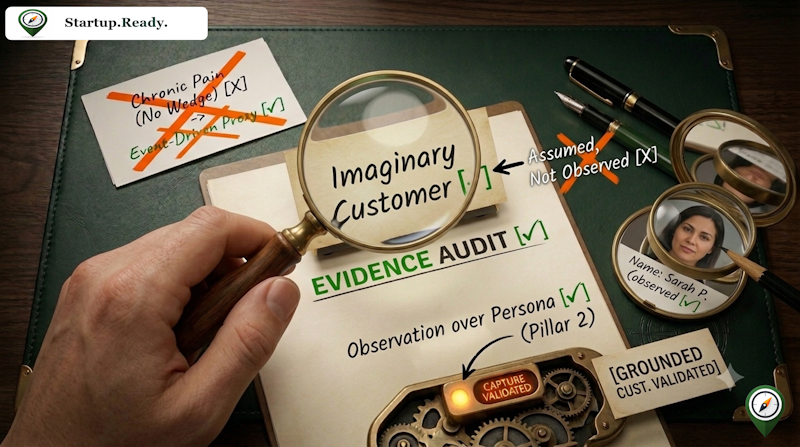
A Specific Customer Can Still Be Imaginary
You can describe your customer in detail. Role, situation, the exact pressure they are under, the moment they finally act. It sounds specific because it is specific. There is one question it does not...
Read More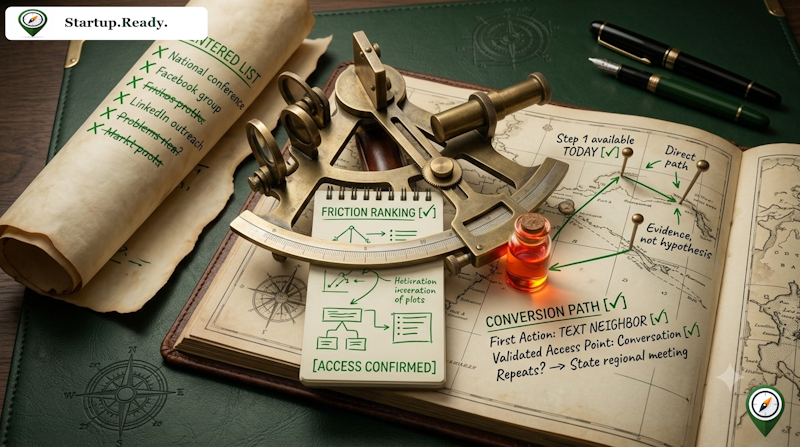
You Do Not Have an Access Point. You Have a List.
Most founders can name five places their customer gathers. Very few have entered one this week.The list feels like progress, and it looks like progress on a slide. Five channels, each plausible, each...
Read More